- Home
- First 100 Years
- Discovery Sites & Their Stories
Discovery Sites & Their Stories
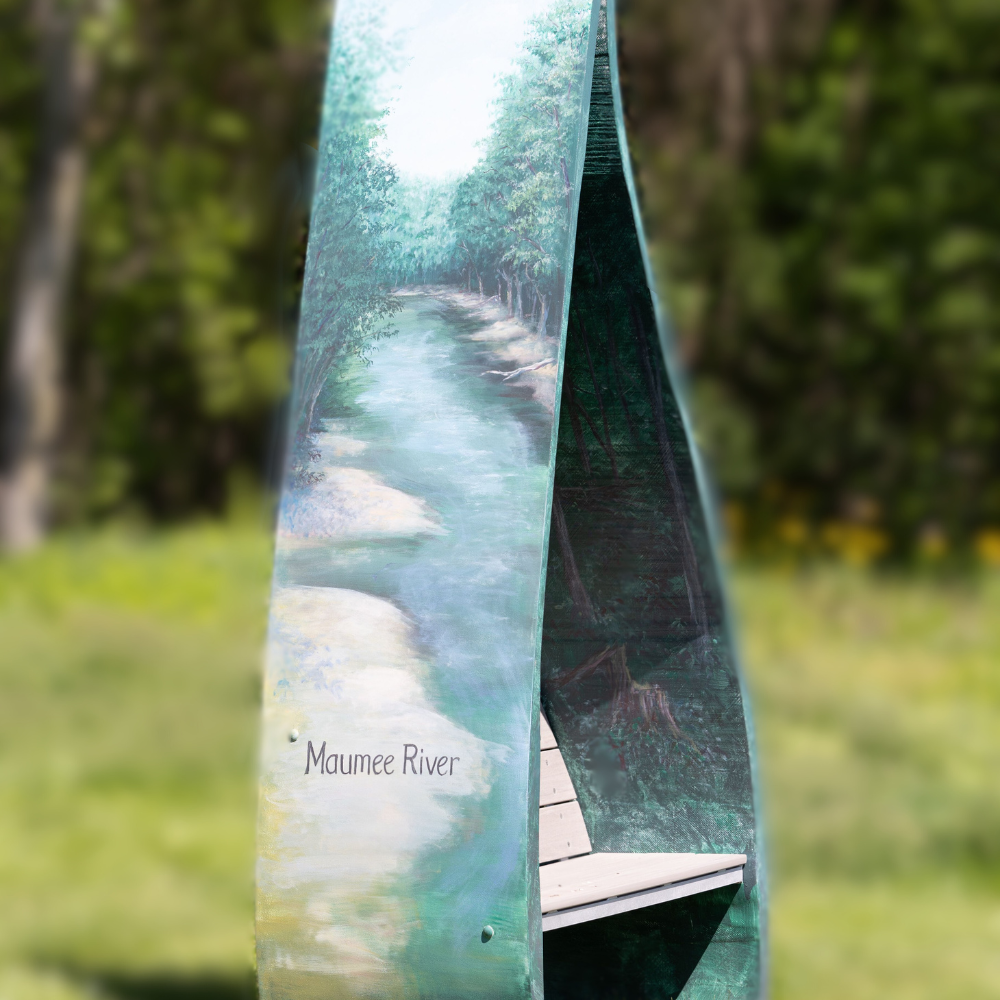 Willow Bench
Maumee River
(Pioneers tame the wilderness)
The first pioneer arrived in 1820 to clear the dense forest for settlement; others soon joined him. The Willow bench brings the pioneers’ rugged inauguration to life. Relax on the bench. You’ll be surrounded by towering trees to contemplate what the early settlers experienced as they arrived in the wilderness to make a new life for their families.
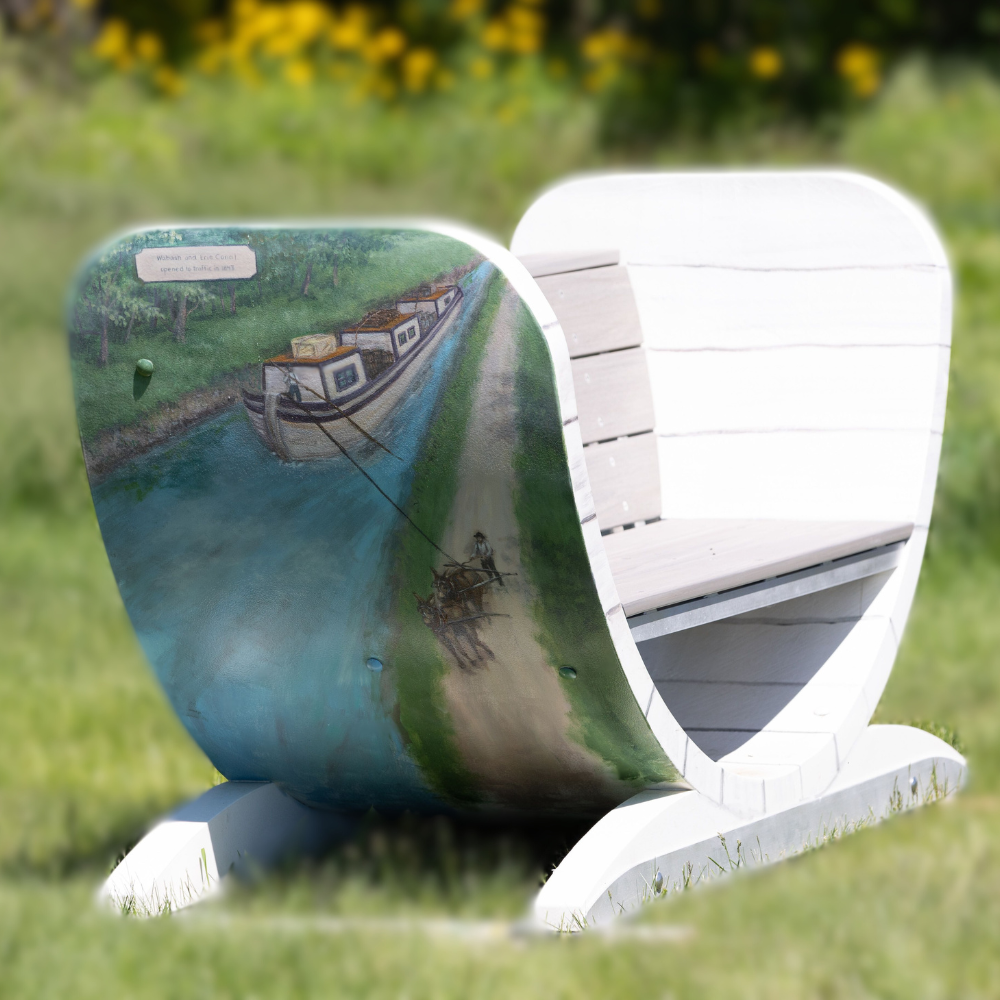 Belle Bench
Downtown Entry
(Wabash & Erie Canal opens to activity)
Canal boats were pulled by mules or horses on a “towpath” running alongside the Canal. Locks raised and lowered boats between different levels of water. Visualize Canal activity and New Haven’s Gronauer Lock at the Belle bench. Rest on it to imagine you’re in a passenger boat traveling along the Canal.
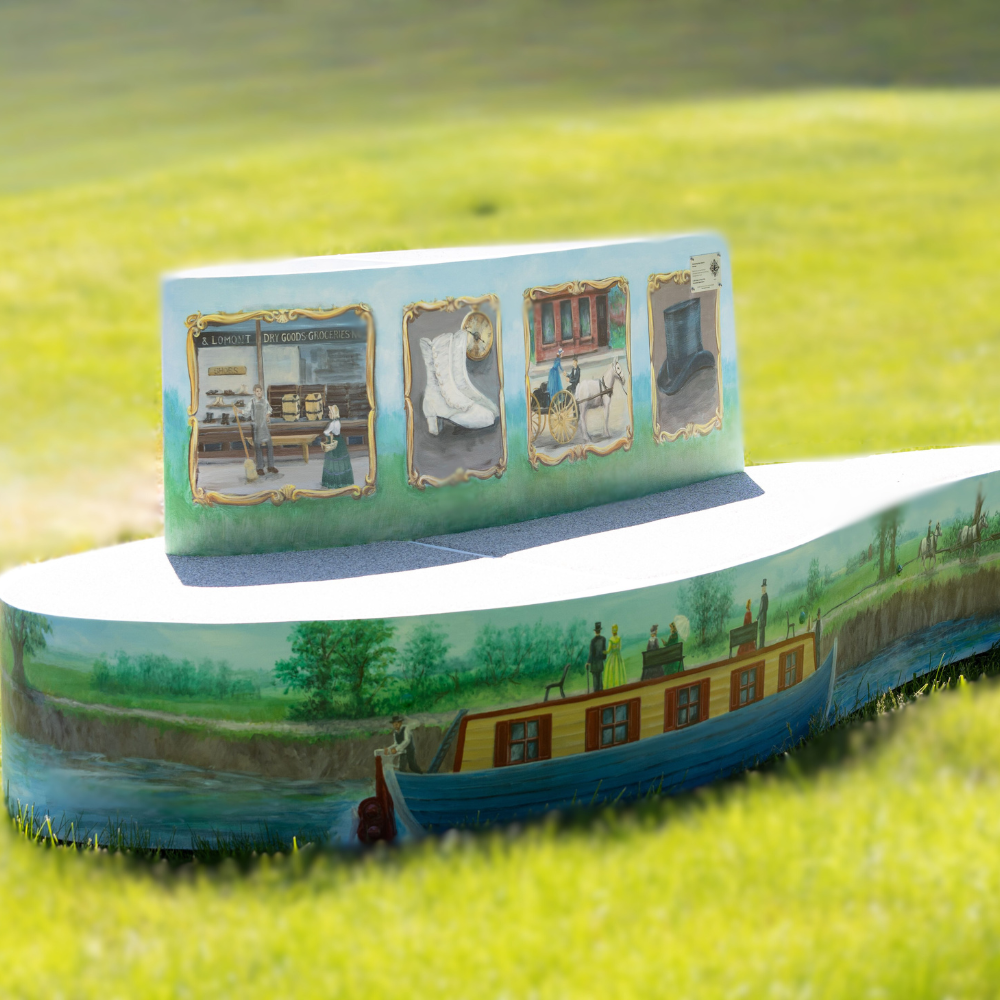 Gus Bench
Canal Landing
(A "canal town" is born)
Canal activity drew both settlers and visitors to the newly platted village to fuel its vitality. The Gus bench places you in the center of that vibrant atmosphere. Watch the dock workers readying a freight boat for transport. Or be part of the activity in the village. Wave to the folks going by in a passenger boat and window shop at the stores.
 Deborah Swing
Post Office
(A transformation is in "full swing")
By 1920, New Haven was a thriving “transportation town.” The Canal was no longer evident but what may have been lost from its absence was more than restored by the railroads and automobiles that followed. At the Deborah swing in front of the post office, you will find postcards of downtown buildings as they appeared then, drawn from actual photographs. The buildings depicted remain today.
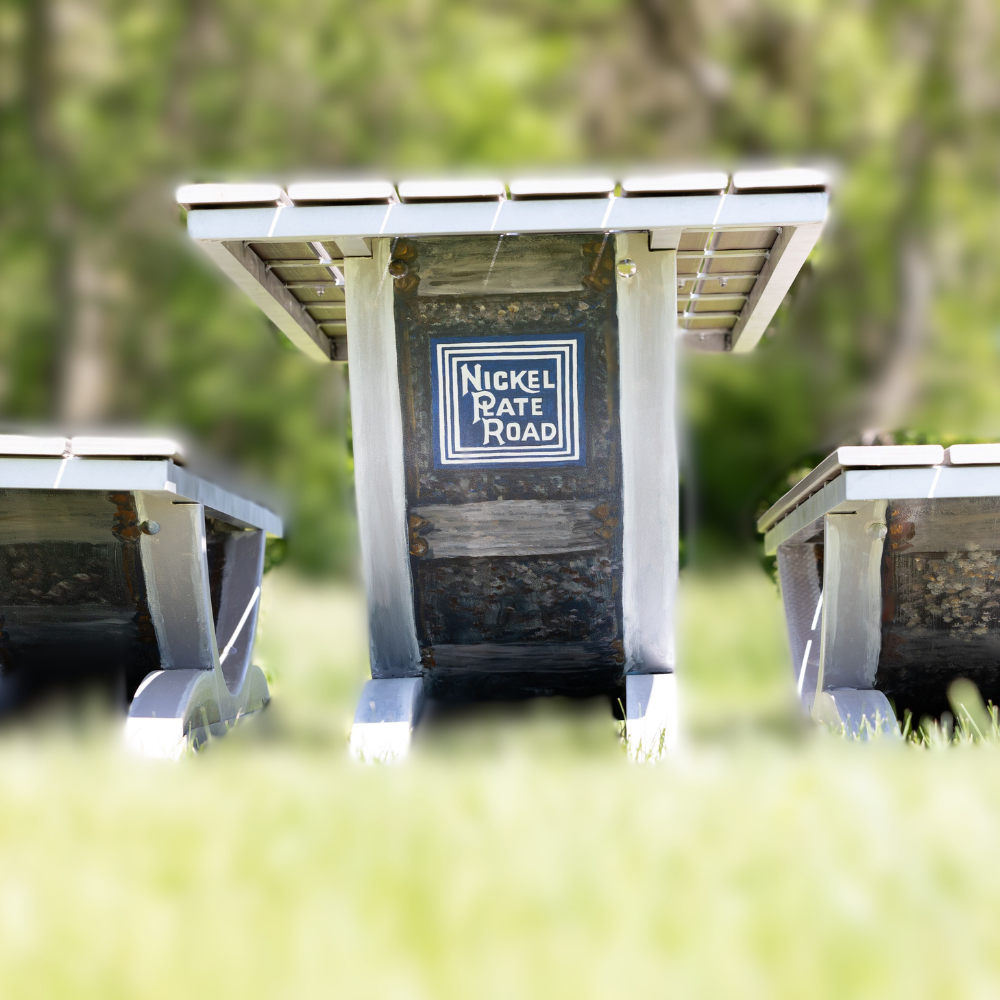 Carole Picnic Set
Broadway Street Railroad Tracks
(Railroads pick up steam)
Railroads provided many advantages over canals and attracted industries that would simply not have been viable with the canals. For a time, both the Wabash and the Nickel Plate railroads ran through New Haven. They eventually became part of today’s Norfolk Southern. As you sit at the Carole picnic set and watch a train pass by, imagine instead a train of yesteryear driven by steam-locomotive roar by.
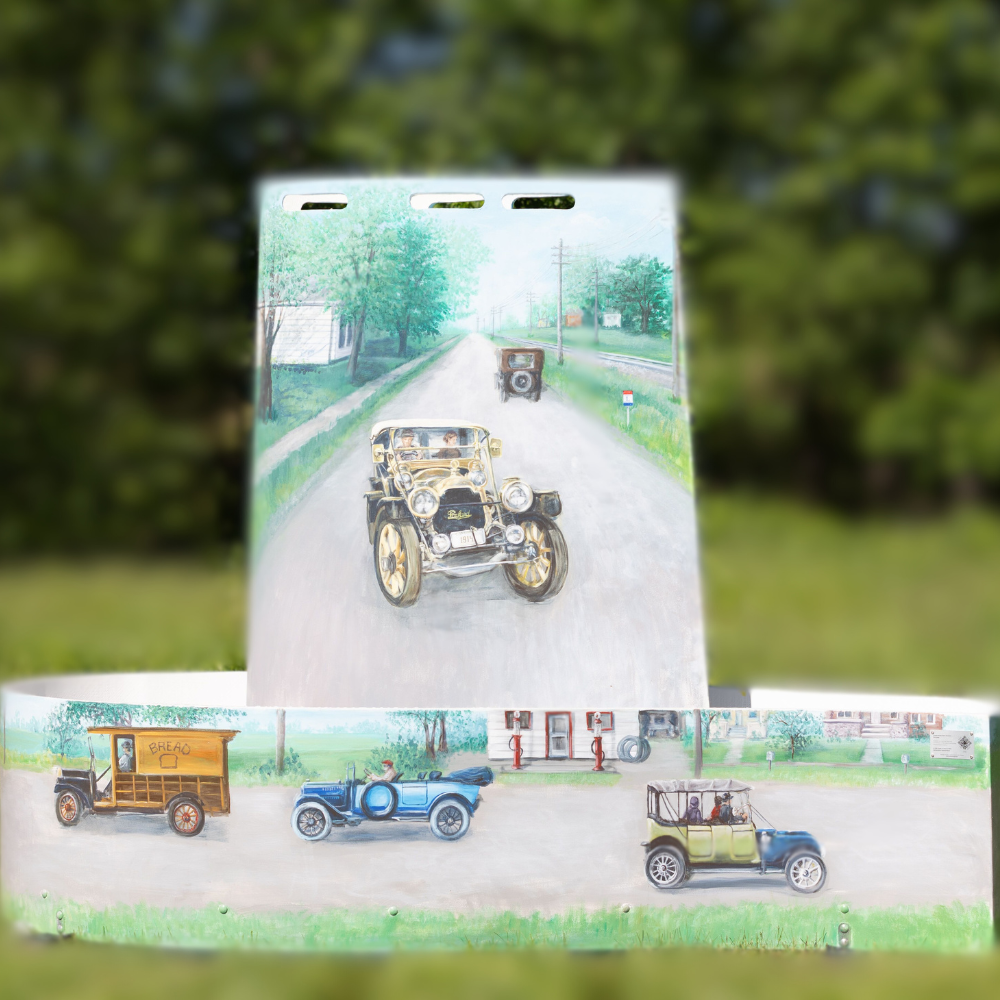 Beacon Planter
City Hall
(Life moves along the Lincoln Highway)
New Haven and its City Hall are privileged to be located along the Lincoln Highway, the first highway to run from coast-to-coast. As you pass City Hall, take note of the Beacon planter and the vehicles that traveled along the highway in its early years. And pull into the parking lot to see on the back the Interurban electric railway that ran along the highway between Fort Wayne and Lima, Ohio.
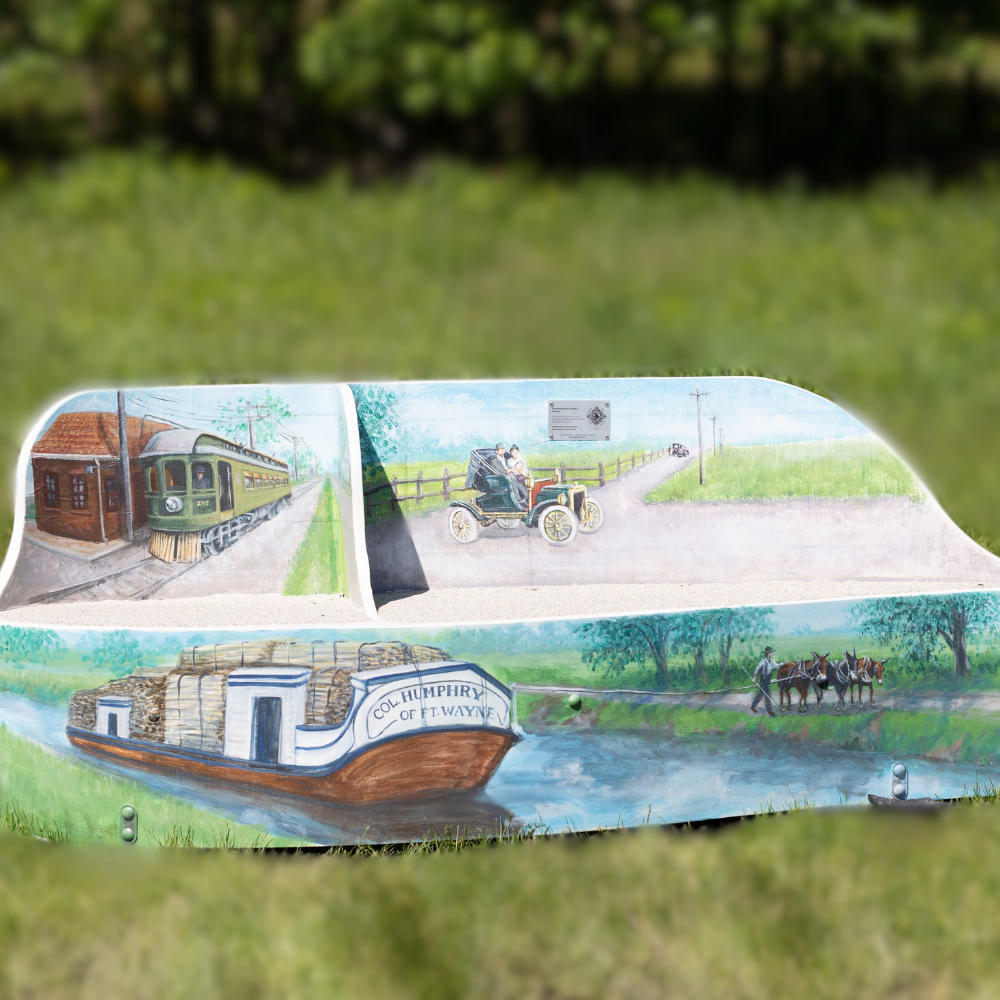 Faye Bench
State Street
(Our transportation heritage in one place)
New Haven is a city of some 12 square miles, yet the essence of its transportation history is captured within a few, short blocks west of downtown. If you seldom have a reason to pass along State Street, the Faye bench now provides one. Its amazing art depicts all the modes of transportation that shaped New Haven’s heritage and converged in this area.
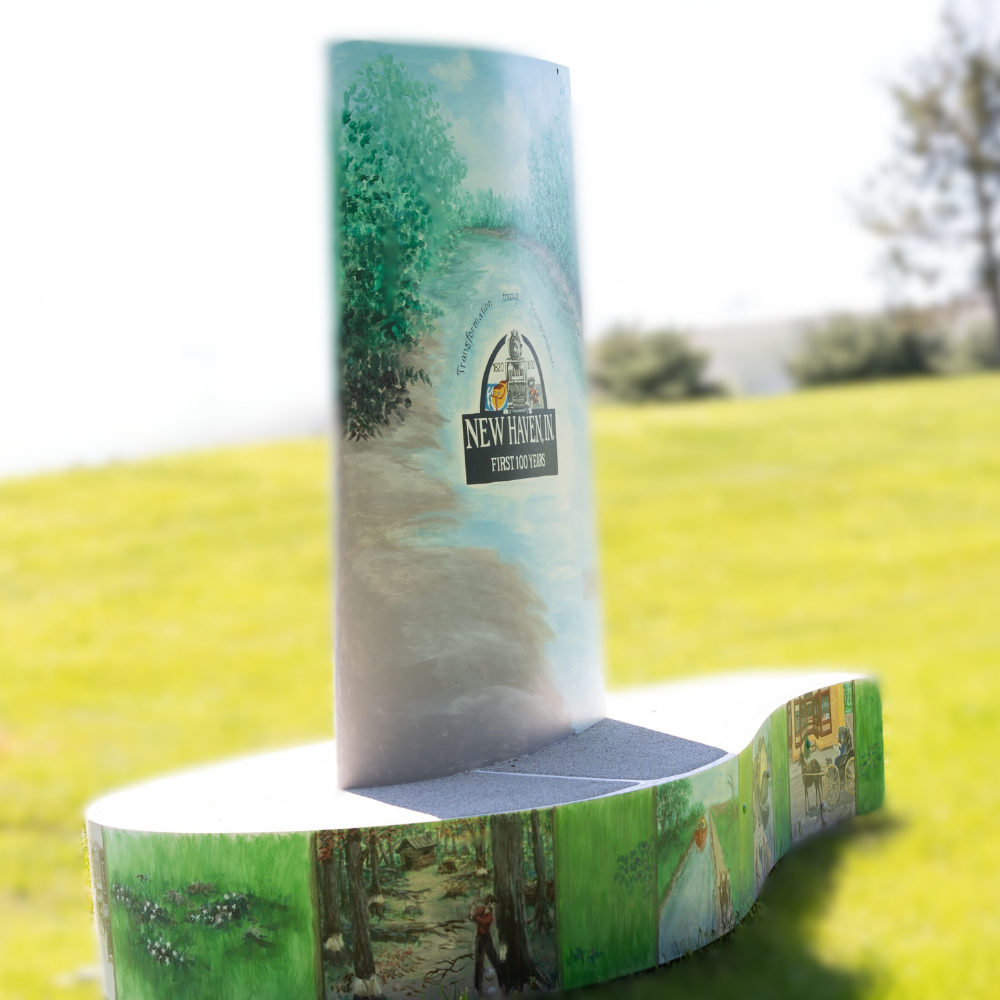 Beacon Bench
Schnelker Park
(New Haven: First 100 Years)
Schnelker Park is the “granddad” of New Haven’s parks, having celebrated its 100th anniversary in 2022. It’s fitting that the summation of New Haven’s first 100 years be on display in Schnelker Park. The scenes depicted on the Beacon bench allow you to reflect on the story of New Haven’s “transformation through transportation” simply by strolling around the bench.