- Home
- First 100 Years
- Part 2: Origin As A "Canal Town"
- Chapter 5: Railroads Promise Growth as Canal Wanes
Chapter 5: Railroads Promise Growth as Canal Wanes
In the early 1800s, Indiana began multiple canal construction projects across the state. The Wabash and Erie Canal was one of only two planned canals that were completed.
Within ten years of its opening, the Canal had produced a fivefold increase in population in the areas through which it traveled and had transformed a wilderness into a settled and prosperous community.
 However, it became increasingly apparent that Indiana’s state-wide construction plan was not economically viable. Construction costs were grossly underestimated, driving the state to the verge of bankruptcy, and money was not available to maintain the canals that were operational.
Even when canal boats were operated at extremely slow speeds, the banks rapidly eroded, and the canals had to be dredged to be operable. Floods washed out dams and aqueducts. Ice in winter and the lack of rain in summer could close the canals. So, when the first railroads were built in the 1850s and 1860s, canals struggled to compete. Railroads overcame the disadvantages of canals and were proving to be far more dominant in stimulating the economy.
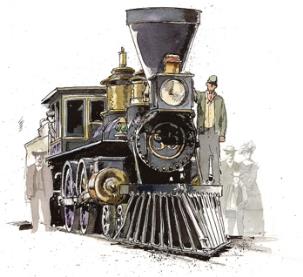 The invention of the steam locomotive made it possible for railroads to connect cities and towns across the nation, allowing goods to be transported more quickly and efficiently. Technological advancements were rapidly introduced in communication, traveling accommodations, more powerful locomotives, heavier freight cars, and overall speeds.
In fact, by the 1860s speeds had improved to the point that one could reach Chicago from New York in just two days. People were quick to replace their horse-drawn carriages with passenger trains as their primary means of transportation.
 The opening of the Wabash Railroad in 1857 for regional trips signaled the inevitable move beyond the Canal if prosperity was to continue.
A period of slow decline came for the Canal in the 1870s as towns along it began to shut down sections. In 1882, the section between Fort Wayne and New Haven was the last to be drained.
 That same year, the Nickel Plate Railroad joined the Wabash Railroad as eager participants in the transportation revolution about to take place in the area.
OF NOTE
Unlike other villages and towns along the Canal, New Haven never lost its vitality as the Canal waned. What the town may have lost from the decline of the Canal was more than restored by the railroads as the network of railways spread rapidly across the country. In the ten-year period prior to 1880, some 40,000 miles of railroad were built, bringing the total network up to 93,267 miles. [Photo: Railways in the U.S. in 1880]